Loading
Total War: ROME II - Emperor Edition / DLC & expansions
Total War: ROME II - Desert Kingdoms Culture Pack
Add-on for Total War: ROME II - Emperor Edition

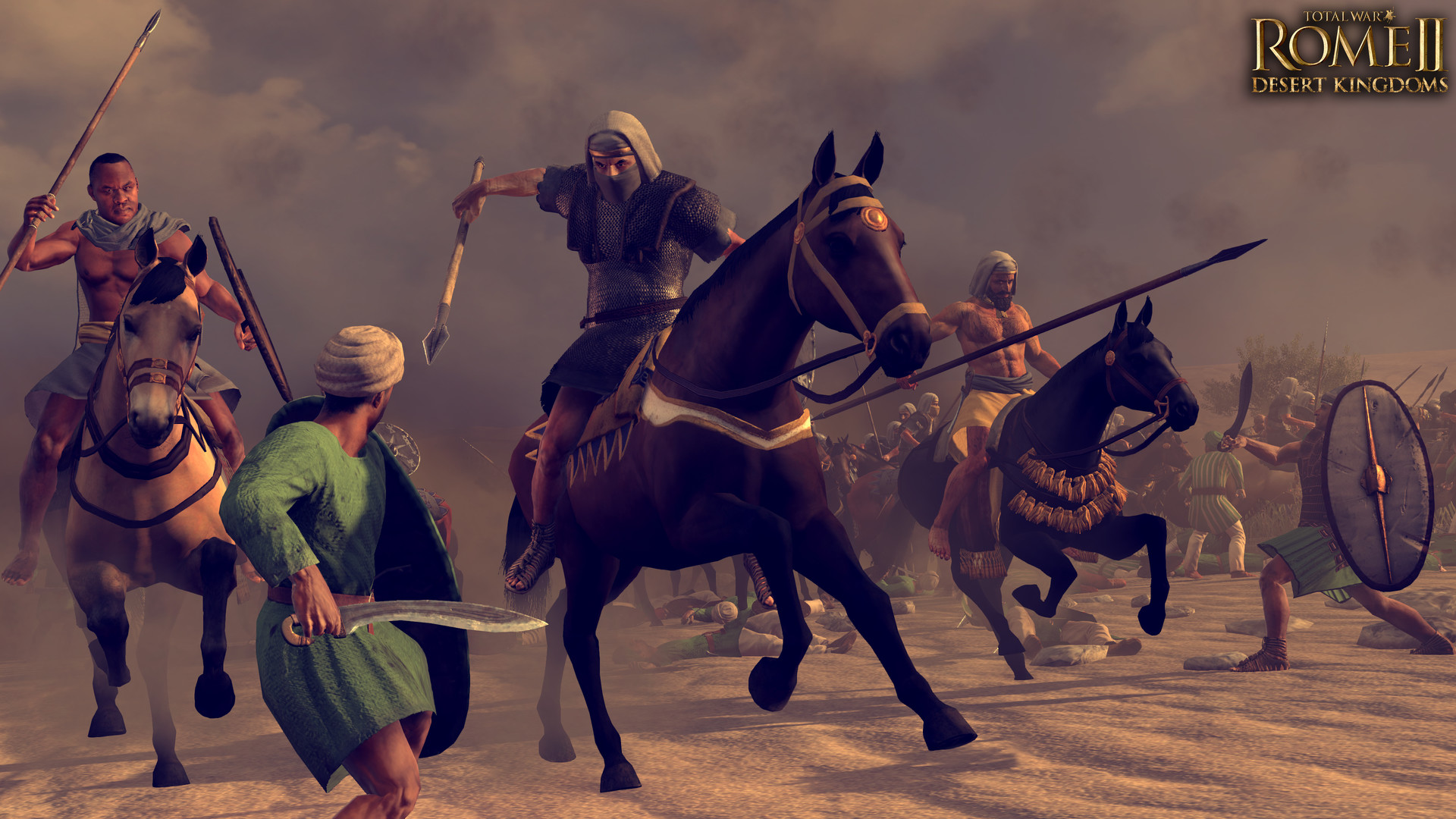
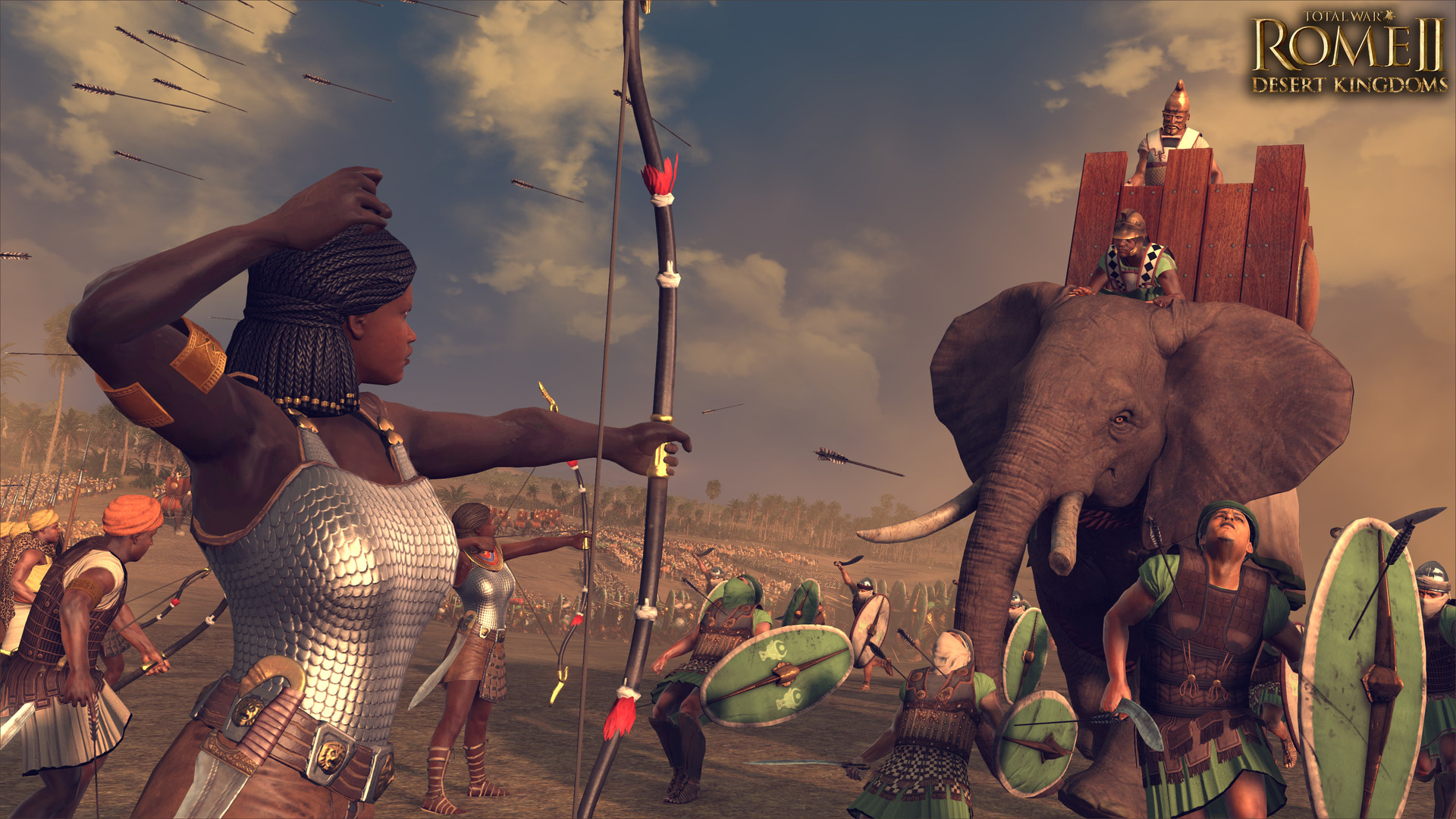
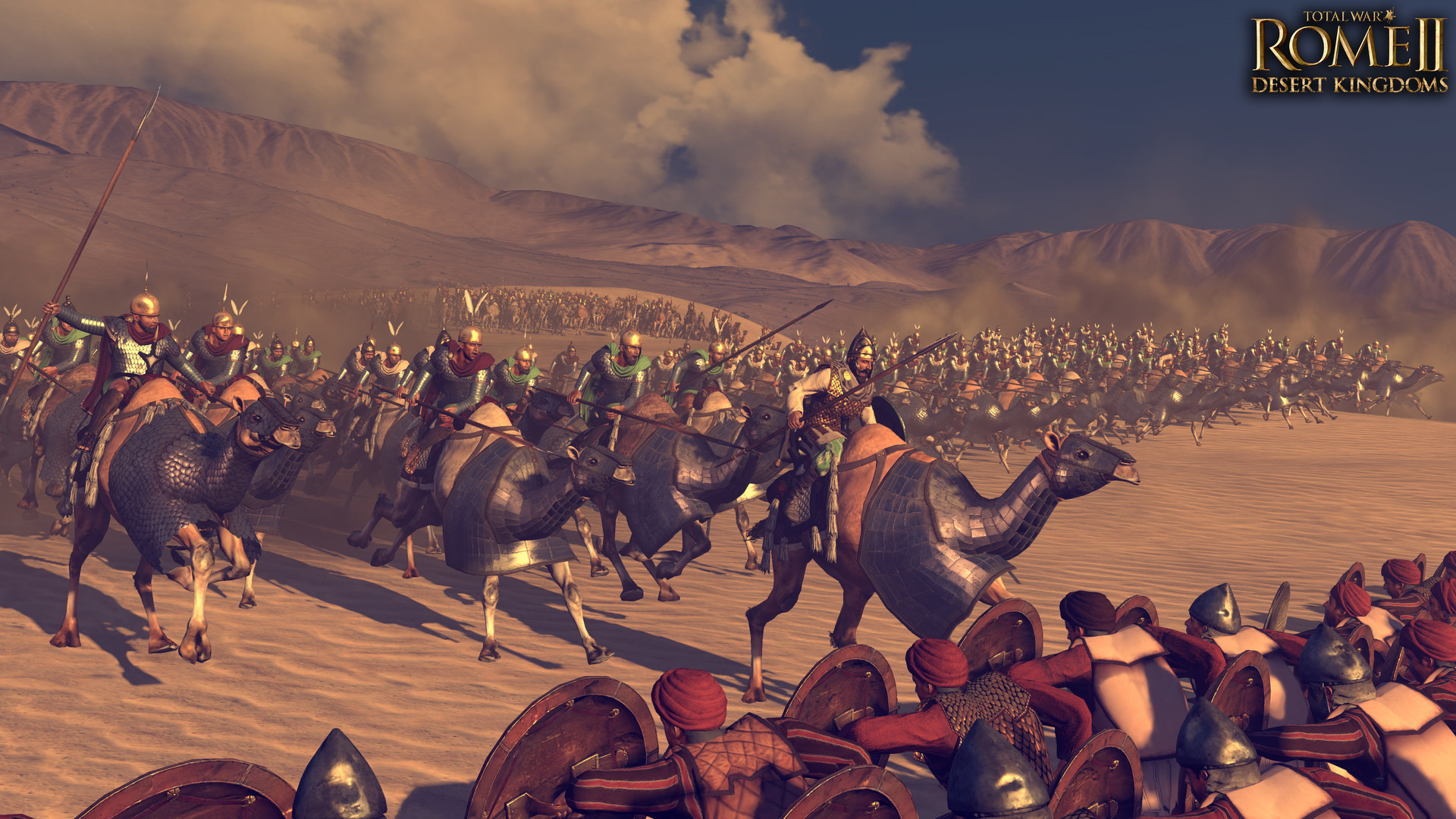
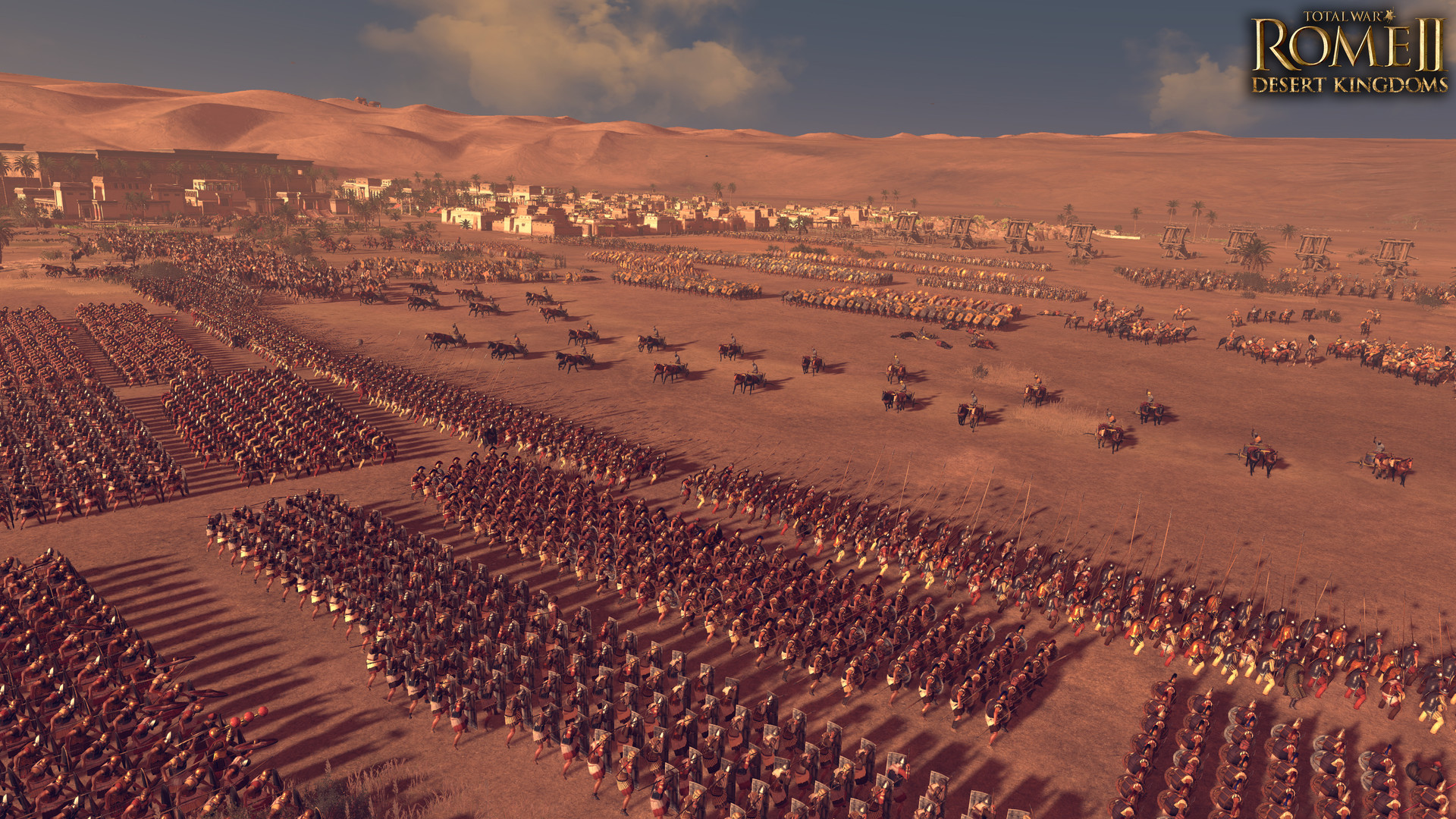
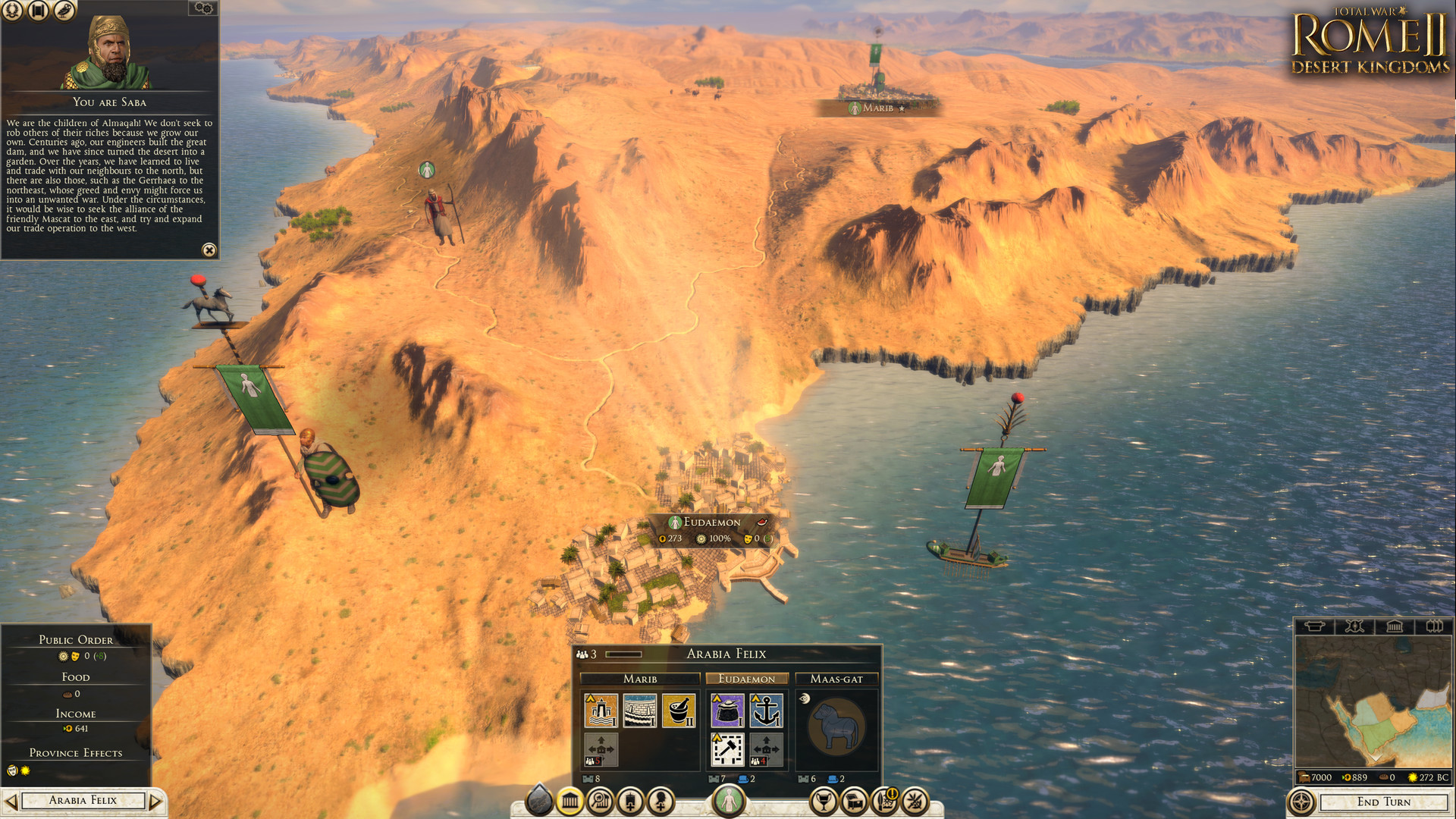
The Desert Kingdoms Culture Pack introduces four new playable factions to Total War: ROME II. The Kingdoms of Kush, Saba and Nabatea fall under the African/Arabian subculture, while the Masaesyli are of Numidian origin.
These factions are native to the deserts of Africa and Arabia. Surviving these harsh environmental conditions has forged them into hardy warriors who use the shifting desert sands to their advantage in battle.
While culturally similar, each faction boasts unique new unit rosters which offer different military strengths. Each faction also has new building chains and technology trees, playing to their strengths and further differentiating their playstyles.
Alongside their individual Faction Traits, the Desert Kingdoms all share the following Cultural Traits:
Desert Warriors: +10% morale for all units during battles in the desert
Deep-rooted Traditions: Penalty to research rate
Meroe (The Kingdom of Kush)
A major regional power with vast resources derived from its trade in gold, jewels and exotic hides, Kush has been overshadowed by its more powerful and famous northern neighbour, Egypt.
In the early 3rd century BC, king Ergamenes decided to wrest power away from the priests of Amun, and moved the capital from Napata to Meroe. The priests would no longer decide the fate of the kings and queens.
The shift of capital also marked something of a break from Egyptian culture with Hellenistic, Indian, Persian and African influences making their way through the trade routes. The kings and warrior queens would sit on the throne and rule with authority and conviction to protect the riches of Nubia. Even the Romans could not conquer Meroe, and preferred to trade instead.
A regional powerhouse with a surfeit of natural treasures and fertile land, Kush is well equipped to prosper and once again vie for power against the mightiest empires in the world.
Key Features:
• Affinity for Egyptian/Hellenistic culture
• Higher probability of female characters in politics
• Trading kingdom (ivory, exotic hides, iron, gold)
Faction Traits:
• Disciplined Workforce: Bonus income from slaves, reduction in slave decline, Reduced Public Order penalty from slaves.
• The Land of the Bow: cheaper, better archer units.
Kush Unit Roster:
Melee Infantry:
T1: Slave Infantry
T2: Swordsmen
T2: Kushite Slave Infantry
T3: Shotel Warriors
T4: Armoured Shotel Warriors
T4: Disciples of Apedemak
Spear Infantry:
T1: Nubian Spearmen
T2: Kushite Slave Spearmen
T3: Leopard Warriors
Pike Infantry:
T2: Kushite Pikes
Missile Infantry:
T1: Tribesmen
T1: Slave Slingers
T2: Nubian Bowmen
T2: Archers
T3: Kushite Archers
T4: Royal Kushite Archers
Melee Cavalry:
T2: Aethiopian Cavalry
T2: Desert Cavalry
T3: Armoured Desert Cavalry
T4: Kushite Royal Guard
Special:
T2: Desert Chariots
T3: African Elephants
T4: African War Elephants
T4: Scythed Chariots
Nabatae
The Nabataeans were great builders and pioneers of advanced construction techniques. They were the first civilization to use cement extensively, and built remarkable watertight reservoirs, ensuring a plentiful supply of potable water. Even when under threat from powerful foes like the Seleucids and Judeans, their progressive society enabled them to flourish and prosper.
The Nabataeans were very literate and had a remarkable degree of gender equality for an ancient civilization, with women participating in both political and religious matters. Nabatae was an important crossroad for the spice trade, serving as a conduit between the southern kingdoms that produced frankincense and myrrh, and the wealthy eastern and western empires who were its primary buyers.
Preserving all this wealth at such a geographically strategic location demanded a well-trained military and a strong navy. Nabatae had both, bolstered by excellent engineering and exploitation of the surrounding environment, making their capital city of Petra a nigh-impregnable bastion.
Key Features:
• Hellenic influence: may recruit Hellenic-t